
EveryStone holds 598,510 public grave records. Only 378 of them give a death year before 1800, and only 16 a year before 1700. We sorted the archive by death year, opened the photo of every record from before 1700 and the most interesting ones from the 1700s, and read the stone. Most dates held up. A few belong to memorials put up centuries later.
Where the old graves sit in the archive
Nearly all our records belong to people who died in the 20th and 21st centuries. The 1800s give us 14,079 records. Before that the numbers drop off fast.
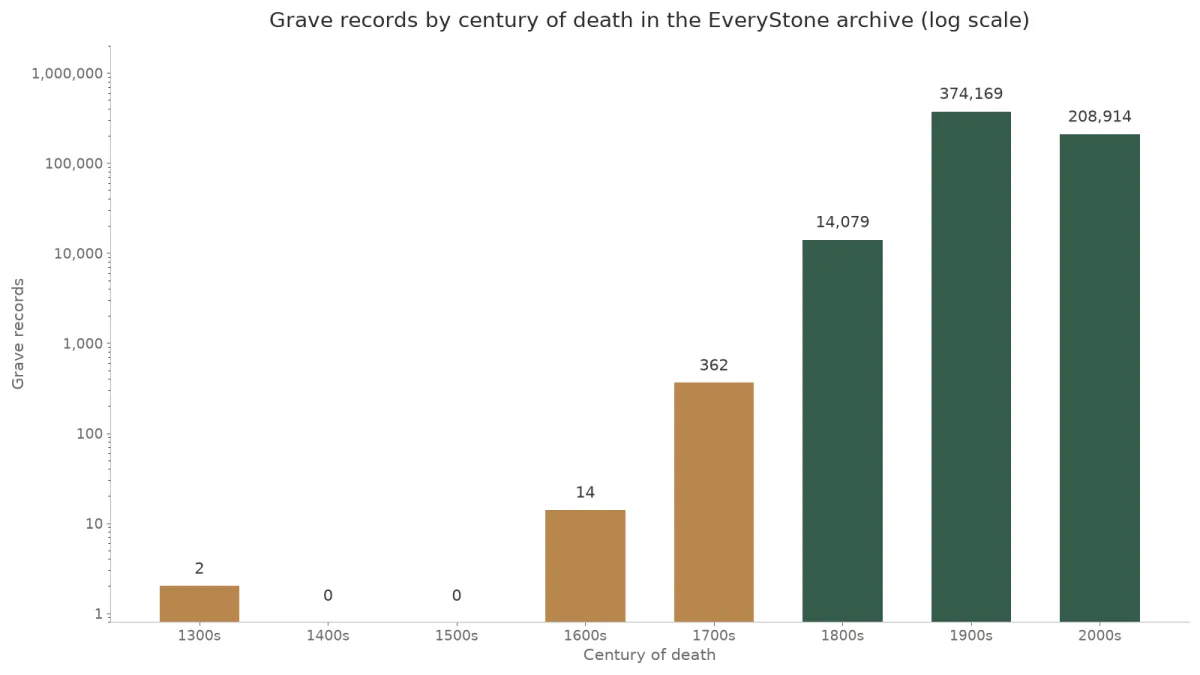
Grave records by century of death, out of 598,510 approved records; 970 have no death year. The scale is logarithmic, so each step up is ten times the one below.
Of the 378 records dated before 1800, 322 come from the United Kingdom. Germany has 18, Denmark 10 and Ireland 7. Almost all of these photos reached us through volunteers, who photographed church interiors as well as churchyards. The oldest stones in our archive mostly survive indoors.
The 1300s: a king and an heiress
The oldest record in the archive belongs to Christopher II, King of Denmark. He was born on 29 September 1276, ruled from 1320 to 1326 and again from 1329, and died on 2 August 1332. He was buried at Sorø Abbey, which we list under Sorø Old Churchyard in Denmark. His grave monument stands in the choir of the abbey church: according to the Danish encyclopaedia lex.dk, it is a large sarcophagus with figures of the king and Queen Euphemia, made in the 1330s.
Our photo shows a Latin wall tablet with the names of Christopher II and his son Valdemar in gilt capitals. A tablet naming these kings was restored and moved to a more prominent place in 1777 on the orders of Christian VII, so the stone in the picture almost certainly comes from that 18th-century restoration and is not his tomb.
The second record comes from St Editha's in Tamworth, Staffordshire. Joan de Freville, widow of Sir Alexander de Freville and heiress of the Marmion lords of Tamworth Castle, died in 1339. A worn stone effigy of a woman in a long gown lies in the church and is usually identified as hers, though that identification is still marked "probably". The church burned in 1345 and was rebuilt between 1350 and 1369. If the figure is Joan, it predates the present church walls.
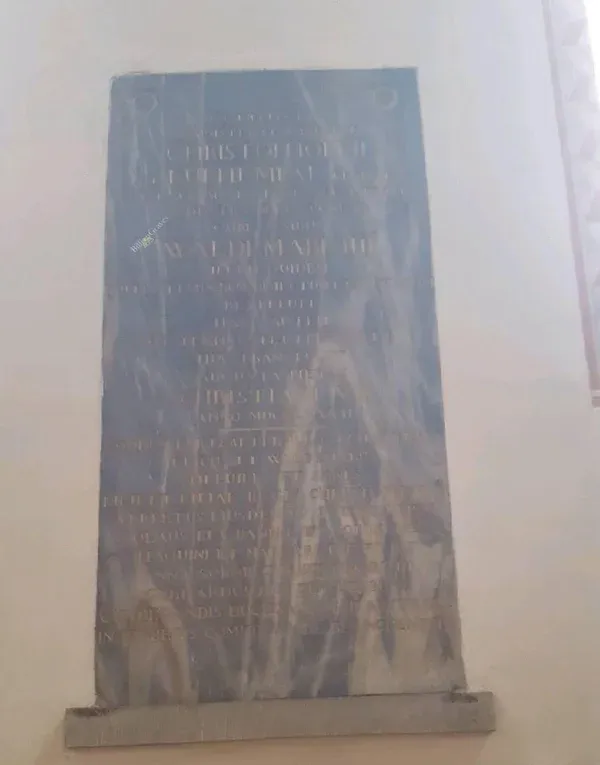
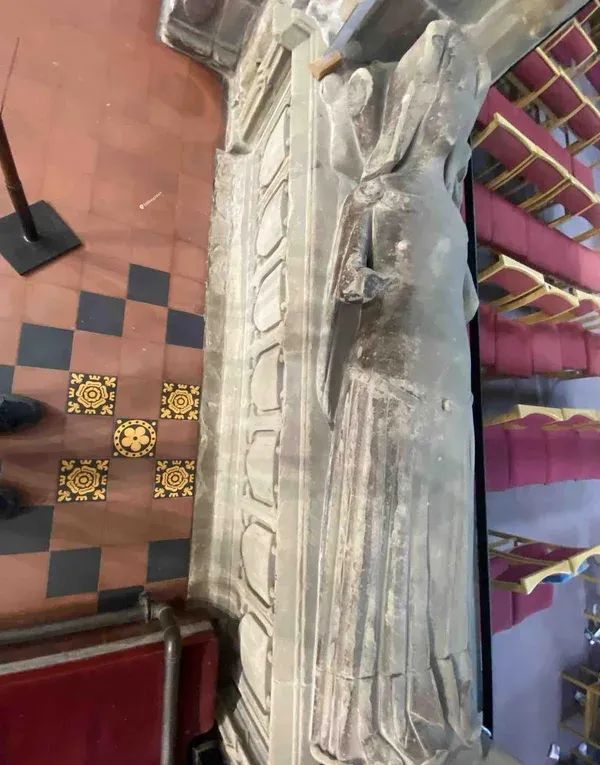
Left: the Latin tablet naming Christopher II, King of Denmark (1276-1332), Sorø Abbey Church. Right: the effigy identified as Joan de Freville (died 1339), St Editha's Church, Tamworth.
The 1600s: fourteen records, eight stones
We hold 14 records with a death year between 1600 and 1699. We read every photo and sorted them into three groups:
- 8 confirmed by an inscription of the period or a dated monument.
- 2 later memorials: a dark stone at Abertamy in Czechia, put up by descendants in 2025 for an ancestor who died in 1649, and a family plaque at Bayerisch Eisenstein in Bavaria dated 2022, which starts with a man who died about 1675.
- 4 we cannot confirm, because the date is worn away, hidden by grass or too small to read in the photo.
The confirmed eight are all English or Scottish, and most of them stand or lie inside a church. Thomas Wentworth, 1st Earl of Strafford, has a wall monument in Holy Trinity Old Church at Wentworth, South Yorkshire. Its gilt inscription records his birth "upon Good Friday the 13th April 1593" and his death on 12 May 1641, the day he was beheaded on Tower Hill.
At Clavering in Essex, Margaret Barlee has a marble bust under a curtain of carved stone. Her inscription says she bore four sons and nine daughters, that six of them died in infancy, and that she died on 16 December 1653 in her 36th year. On St Mary's in the Isles of Scilly, a slate plaque at Old Town church remembers Francys Hunkyn, wife of Joseph Hunkin, the islands' Parliamentarian governor. Lichen covers much of it, but "the 30 day of March 1657" and "about the 46 yeare of her age" can still be read.
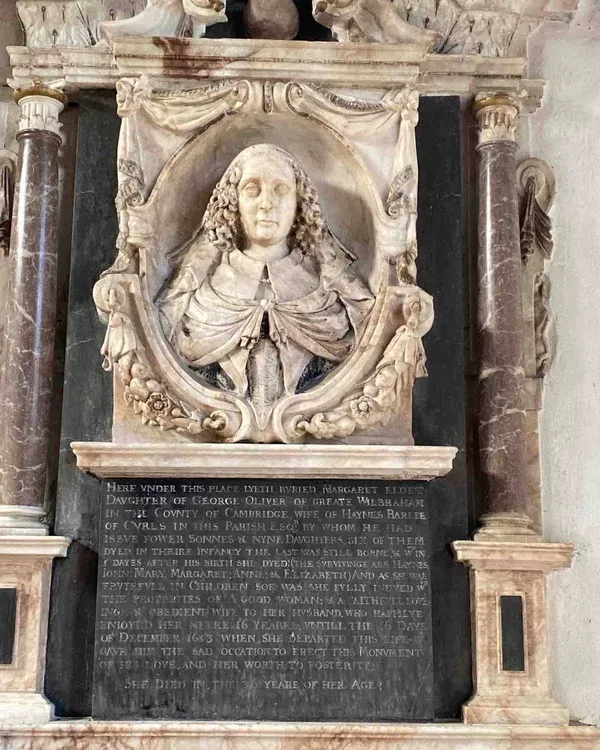
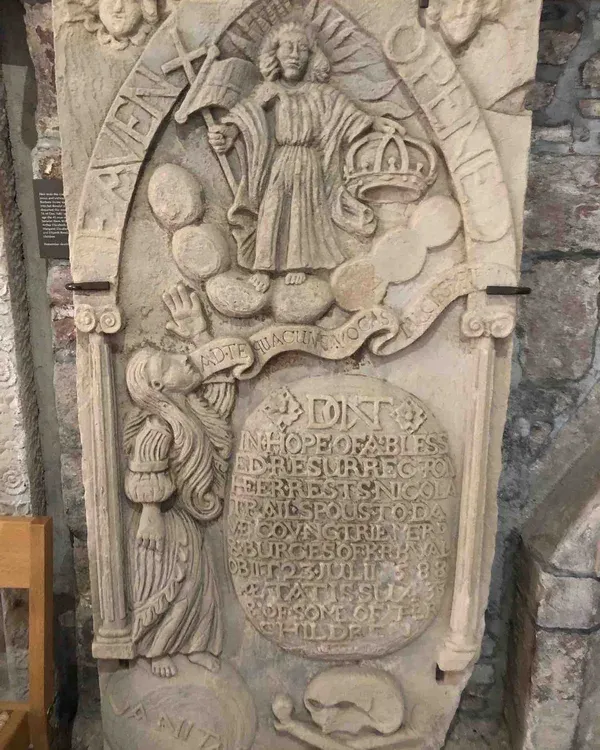
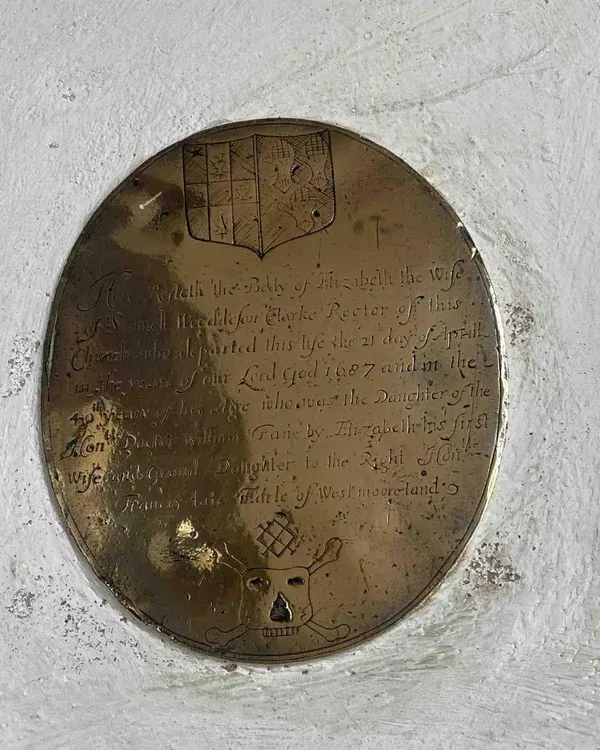
Left to right: Margaret Barlee (died 1653), Ss Mary and Clement, Clavering; Nicola Trail (died 1688), St Magnus Cathedral, Kirkwall; Elizabeth Wooddeson (died 1687), St Peter and All Hallows, Huntspill.
The 1680s give us four more. A ledger at Salisbury names Ann Minifie, wife of Richard Minifie, who died on 29 August 1683 aged 40. At Washingborough in Lincolnshire, a Latin slab marks Iacobus Bateman, rector of the parish, who died on 22 March 1686 in his 54th year. At Huntspill in Somerset, a brass oval remembers Elizabeth Wooddeson, wife of the rector and granddaughter of an Earl of Westmorland, who died on 21 April 1687 in her 40th year. In St Magnus Cathedral in Kirkwall, Orkney, a carved slab shows a woman kneeling under the risen Christ. Its inscription says Nicola Trail, spouse to a merchant burgess of Kirkwall, died on 23 July 1688 aged 33, and that some of her children lie with her.
The latest confirmed grave of the century lies outdoors. A ledger at Penn in Buckinghamshire covers John Long, "Citizen and Merchant of London", who died in December 1696 aged 50.
The 1700s: 362 records
From 1700 the numbers climb: 362 records, 309 of them British, and more each decade. The 1790s alone give 94. In the lapidarium at Wschowa in western Poland, a column topped by an urn records in German that Gottfried Fendler, a burgher of the town, was born on 20 March 1727 and died on 4 November 1791. At Nivelles in Belgium, a Latin plaque marks the grave of the sculptor Laurent Delvaux, who worked for the Emperor and for Charles of Lorraine. It gives his death as the sixth day before the Kalends of March 1778, which is 24 February, and his age as 82.
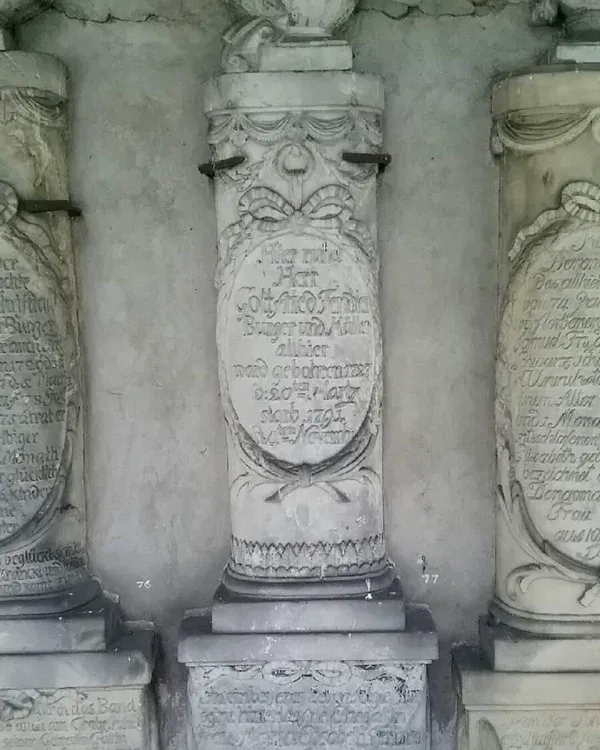
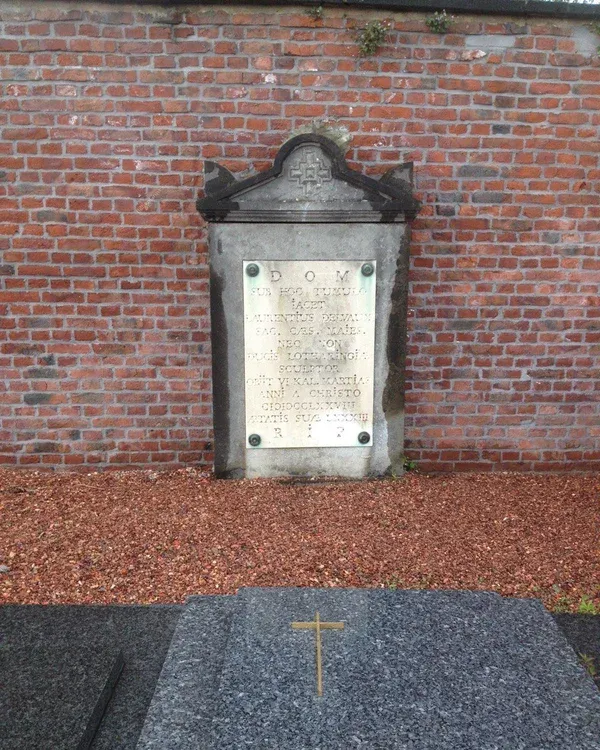
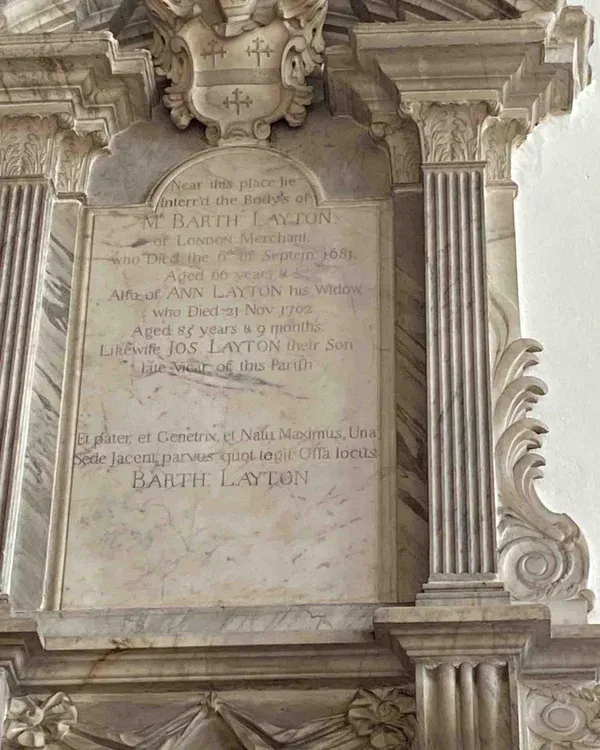
Left to right: Gottfried Fendler (1727-1791), Wschowa Funerary Sculpture Lapidarium; Laurent Delvaux (died 1778), Nivelles Communal Cemetery; Ann Layton (died 1702 aged 85), St Peter and St Paul, Ringwood.
Three of the 1700s records show what can go wrong: one misread inscription and two later memorials. In Herrnhut God's Acre in Germany, a flat Moravian stone from 1751 calls the dead man a "treuer Diener", a faithful servant, of the Brethren's Church; an imported record had turned those words into a man called "Trevor Diener", and we have since removed it. At Kullamaa in Estonia, the pastor Heinrich Gutsleff (1680-1747) has a modern granite stone, which itself says he was buried inside the church. In Rykhtychi near Drohobych in western Ukraine, a family plaque of polished granite lists seven members of the family, born between 1729 and 1862. The earliest is an Anna born in 1729 who died in 1792.
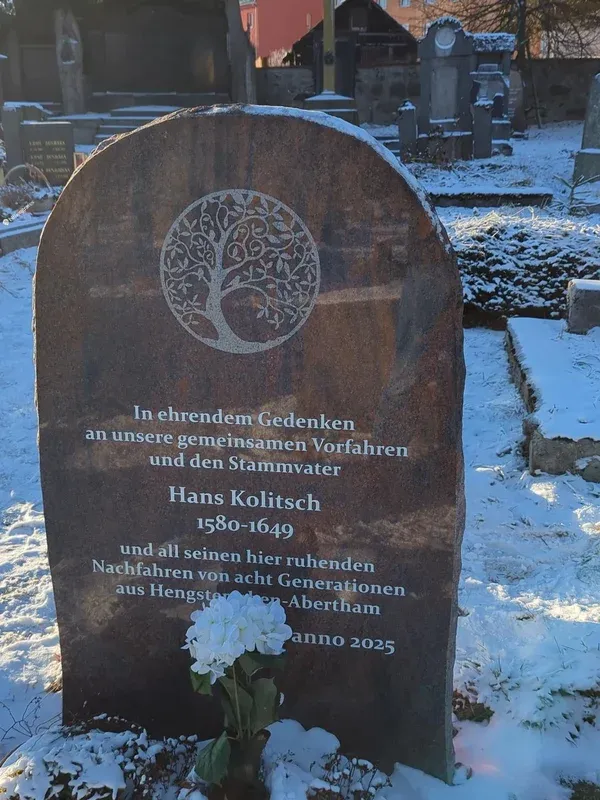

Later memorials: left, a 2025 stone for Hans Kolitsch (1580-1649), Abertamy Cemetery, Czechia; right, the Swieriak-Kresen family plaque, which lists Anna (1729-1792) last, Rykhtychi Cemetery, Ukraine.
The oldest graves in our archive
| Person | Died | Cemetery | Country | What the photo shows |
|---|---|---|---|---|
| Christopher II, King of Denmark | 1332 | Sorø Abbey Church | Denmark | Later Latin tablet |
| Joan de Freville | 1339 | St Editha's, Tamworth | United Kingdom | Medieval effigy, identity probable |
| Thomas Wentworth, Earl of Strafford | 1641 | Holy Trinity Old Church, Wentworth | United Kingdom | Wall monument |
| Margaret Barlee | 1653 | Ss Mary and Clement, Clavering | United Kingdom | Wall monument with bust |
| Francys Hunkyn | 1657 | Old Town church, St Mary's, Scilly | United Kingdom | Slate plaque |
| Ann Minifie | 1683 | St Thomas Becket, Salisbury | United Kingdom | Floor ledger |
| Iacobus Bateman | 1686 | St John's, Washingborough | United Kingdom | Latin slab |
| Elizabeth Wooddeson | 1687 | St Peter and All Hallows, Huntspill | United Kingdom | Brass plate |
| Nicola Trail | 1688 | St Magnus Cathedral, Kirkwall | United Kingdom | Carved slab |
| John Long | 1696 | Holy Trinity, Penn | United Kingdom | Churchyard ledger |
Why so few old graves survive
Most people who died before 1650 never had a stone. The archaeologist Bob Silvester writes that permanent stone grave markers became common in England and Wales only in the second half of the 17th century, and that before then they were extremely uncommon, though wooden crosses may have been used. Our own list fits his account: the confirmed graves from before 1700 belong to a king, an earl, landed families, clergy and merchants, and most of them lie under a church roof.
Stones that did exist were often put to other uses. At Skipwith in Yorkshire, the archaeologist Aleksandra McClain found 39 medieval grave slabs, 37 of them reused as coping stones on the churchyard wall. At Kirby Ravensworth, more than thirty slabs became steps in a tower staircase built in 1397.
In much of Europe the plot itself is rented. Under German law, families lease a grave for usually 15 to 30 years; if nobody renews the lease, the headstone comes away and the plot is used again. Because plots are cleared, several of our records from the 1600s and 1700s in Germany and Czechia point to family plaques put up much later.
Roots, mosses and lichens work into the stone, frost splits it, surface layers flake away, and slightly acidic rain dissolves the surface a little at a time. On Scilly, lichen has covered much of the Hunkyn plaque in under four centuries.
Help us read the old stones
Every record above links to its photo, and many of the stones are hard to read in a single picture. If you live near one of these churches, a photo in raking light, taken early or late in the day, can settle a date we could not confirm. In the EveryStone archive you can upload photos and suggest corrections to existing records when the stone says otherwise.